
A new site can appear in search without running a link-building campaign. Whether a particular page competes well depends on the query, its usefulness and many other signals. There is no published minimum backlink count that makes a page eligible to rank.
Also distinguish “I did not build links” from “no links exist.” Links can arise without your involvement, and link reports are not exhaustive evidence of absence.
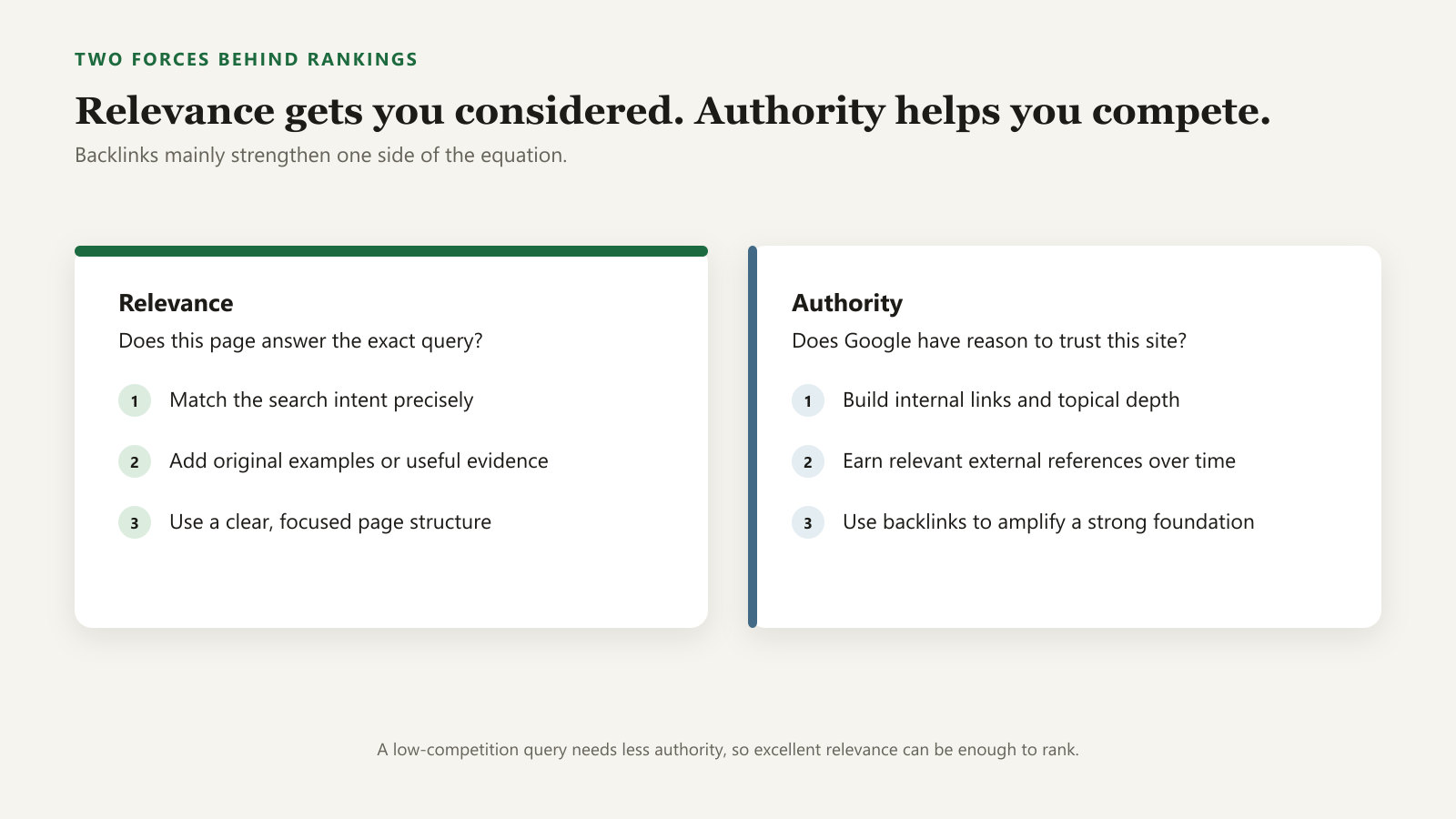
What links contribute
Links help people and search engines discover pages and understand relationships. Google describes link analysis among its ranking systems, alongside many other systems. It is too simple to reduce ranking to a two-part formula or a site's age.
Internal links help connect your own material. They do not manufacture independent endorsements, and a cluster of posts does not automatically establish expertise. Build the connections because they help a reader move between related tasks.
Evaluate the query rather than counting small sites
- Define the reader's task in one sentence.
- Review results for the intended country and language, recording the date.
- Read the pages, not just their domain names. What evidence, tool or answer makes each useful?
- Identify a specific improvement you can deliver with your own knowledge or resources.
Reddit, Quora and smaller blogs are not automatic signs of low competition. A discussion thread may satisfy a request for experiences better than an article does. A low-volume phrase can also be commercially competitive. Use the keyword worksheet to make the judgment explicit.
Three questions before choosing a target
- RelevanceDoes this query match the people and problems your site serves?
- ContributionCan you add something specific that a reader would value?
- FeasibilityCan you produce and maintain that answer with your available resources?
Make the page worth discovering
First check the indexing status. Then answer the task clearly, support claims, and link to the page from relevant parts of your site. Use descriptive anchor text so the destination is understandable before someone clicks.
A useful resource might be a carefully explained troubleshooting process, a tested template or an original comparison. For example, a worksheet that helps someone distinguish an indexing block from a duplicate URL can have a clear purpose. That is an idea for a resource, not a claim that it has earned rankings or links.
Follow Google's link best practices for crawlable links. Avoid repeating the same keyword-rich anchor everywhere regardless of context.
Earn references when there is something worth sharing
You do not need to wait for an arbitrary month or traffic threshold to share useful work. Relevant communities, professional relationships and publications may be interested when a resource answers a real question. Make the usefulness clear and respect the venue's rules.
Evaluate an opportunity by audience fit and the value of the reference, not just a third-party authority score. Do not buy ranking credit, exchange links at scale or publish low-value guest articles solely for links. Google lists these kinds of manipulation in its link spam policy. Advertising and affiliate relationships need appropriate disclosure and link qualification.
Decide what to work on next
Filter Search Console to the page and inspect relevant queries. If the page is not indexed, solve that issue first. If the page answers a different task from the leading results, improve the targeting. If it is useful but barely discoverable, improve navigation and consider relevant ways to share it.
Do not interpret every weak ranking as a backlink shortage. Conversely, do not assume links never matter because one page performs well. Keep changes and observations in a change log.
Match effort to the problem
- Excluded URLInvestigate the reported indexing reason.
- Weak answerImprove evidence, clarity and task completion.
- Useful but hard to findImprove internal discovery and seek relevant exposure.