
SEO has no universal countdown. A technical fix, a newly discovered page and a stronger answer involve different processes. Some changes become visible sooner than others, and improved rankings are never guaranteed.
For a new site, set review points around evidence: whether Google has fetched the page, whether the intended URL is indexed, which searches produce impressions, and whether those visitors find the answer useful.
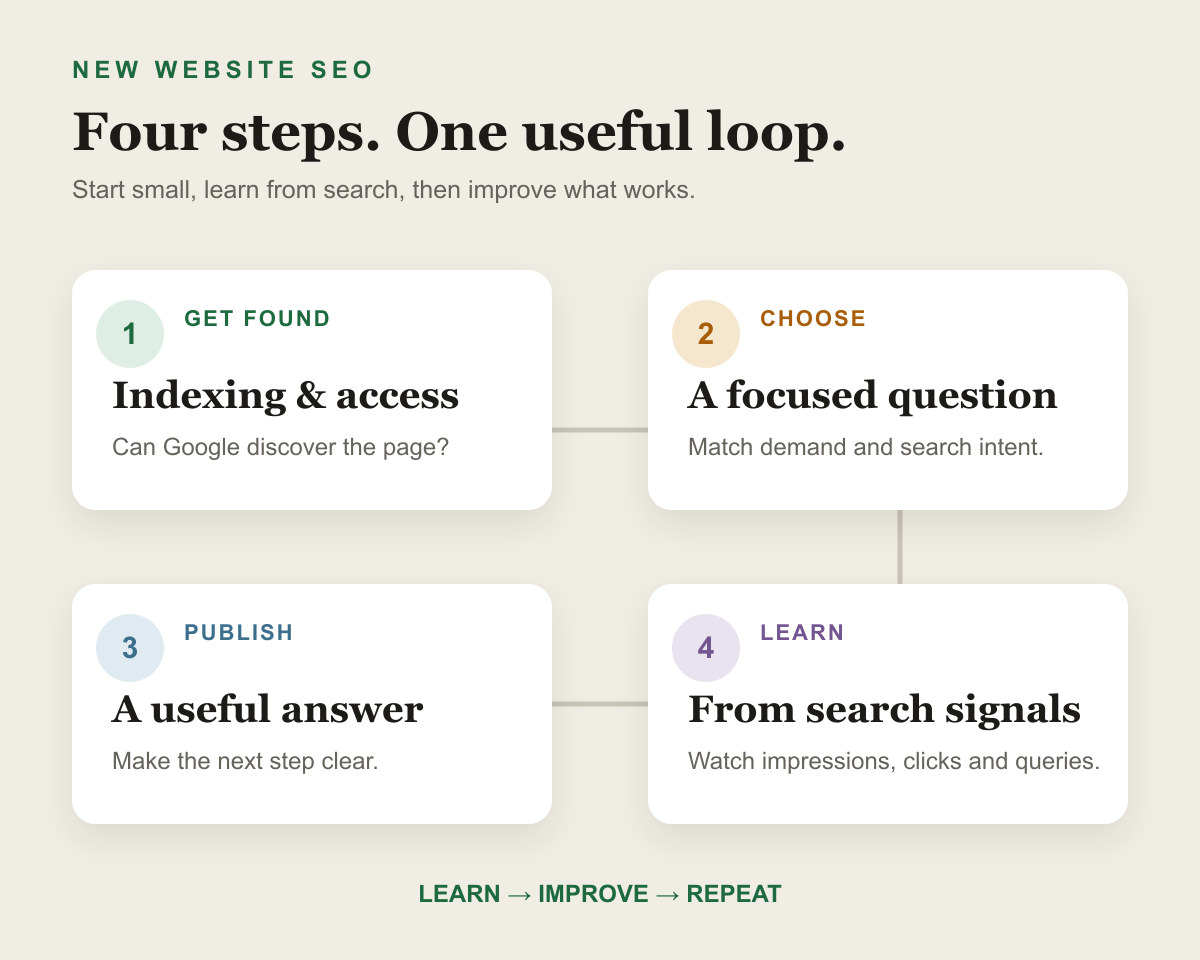
Separate the outcomes you are waiting for
Getting crawled is different from being indexed; being indexed is different from receiving clicks. A sitemap submission only helps discovery. A live test only checks the current page for what the test can assess.
Use the indexing walkthrough when you do not yet know the status. Once indexed, assess performance by the page and its relevant queries. Do not treat each stage as a guaranteed promotion to the next.
Which question are you trying to answer?
- Has Google fetched it?Check crawl information and whether it predates your change.
- Is the right URL indexed?Review the stored index result and canonical choice.
- Is it reaching readers?Review queries, impressions and clicks with comparable filters.
Do not diagnose a fixed sandbox period
Google's published guidance does not establish a mandatory three- or six-month sandbox for every new domain. A quiet period or fluctuating position is not proof that such a filter is operating.
Demand, competition, discovery, content and changes to search results can all affect what you see. Google's ranking systems overview describes multiple systems rather than a universal new-site timetable. Work on a verified problem instead of attributing every delay to age.
When to act and when to keep monitoring
- Act on a confirmed block: repair an unintended noindex, inaccessible page or wrong canonical signal.
- Improve a clear mismatch: if the page does not answer the reader's task, revise it with specific evidence and useful steps.
- Monitor processing: if the last crawl predates a fix, verify the live page and then watch for a new crawl.
- Investigate a broader decline: compare affected pages, filters, demand and relevant changes before diagnosing a penalty.
Check Search Console's Manual actions and Security issues reports where appropriate; an ordinary ranking fluctuation alone does not establish a manual action. Use the troubleshooting guide for a structured review.
Compare like with like
In the Performance report, compare the same page or page group over equivalent periods. Hold the country, device and search type constant. Note seasonality and changes in the queries receiving impressions.
A falling site-wide average position can coexist with growth when the site begins appearing for many additional queries. A high percentage change on a tiny sample can also exaggerate a small difference. Record counts and context rather than reading one metric as a verdict.
Choose a review cadence that fits the amount of evidence. A weekly note can organize your work, but it is not a Google timing recommendation. Avoid making major changes solely because one day's results moved.
Keep a change log you can interpret
| Field | Example entry to record |
|---|---|
| Page and date | The exact URL and when you made the change. |
| Observed issue | A report status, an unanswered question or a reproducible problem. |
| Change | The specific fix, section revision or internal link added. |
| Processing evidence | Last crawl, indexed result and any live-test observations. |
| Comparison | Date ranges, query/page filters, country, device, counts. |
| Interpretation | What changed, what remains uncertain and the next check. |
Illustrative entry: “Added the missing setup steps to an indexed guide. Compare its relevant queries after Google has revisited it; record any other changes in the same period.” This describes a method, not a measured result.
Separate an observation from a conclusion
- ObservationThe page received more impressions in the compared period.
- Possible explanationThe revision may have helped; demand and query mix also changed.
- Next checkReview comparable queries and record other changes before attributing causation.
Plan work around what you can improve
Choose useful questions, make pages accessible, support the answers and connect related material. Add a new page when it serves a distinct need; see how to plan the next article.
Google's recrawl guidance gives a broad processing range for crawling, not a deadline for traffic. If you need a business forecast, label it as your own assumption and revisit it with real data rather than presenting it as Google's schedule.