
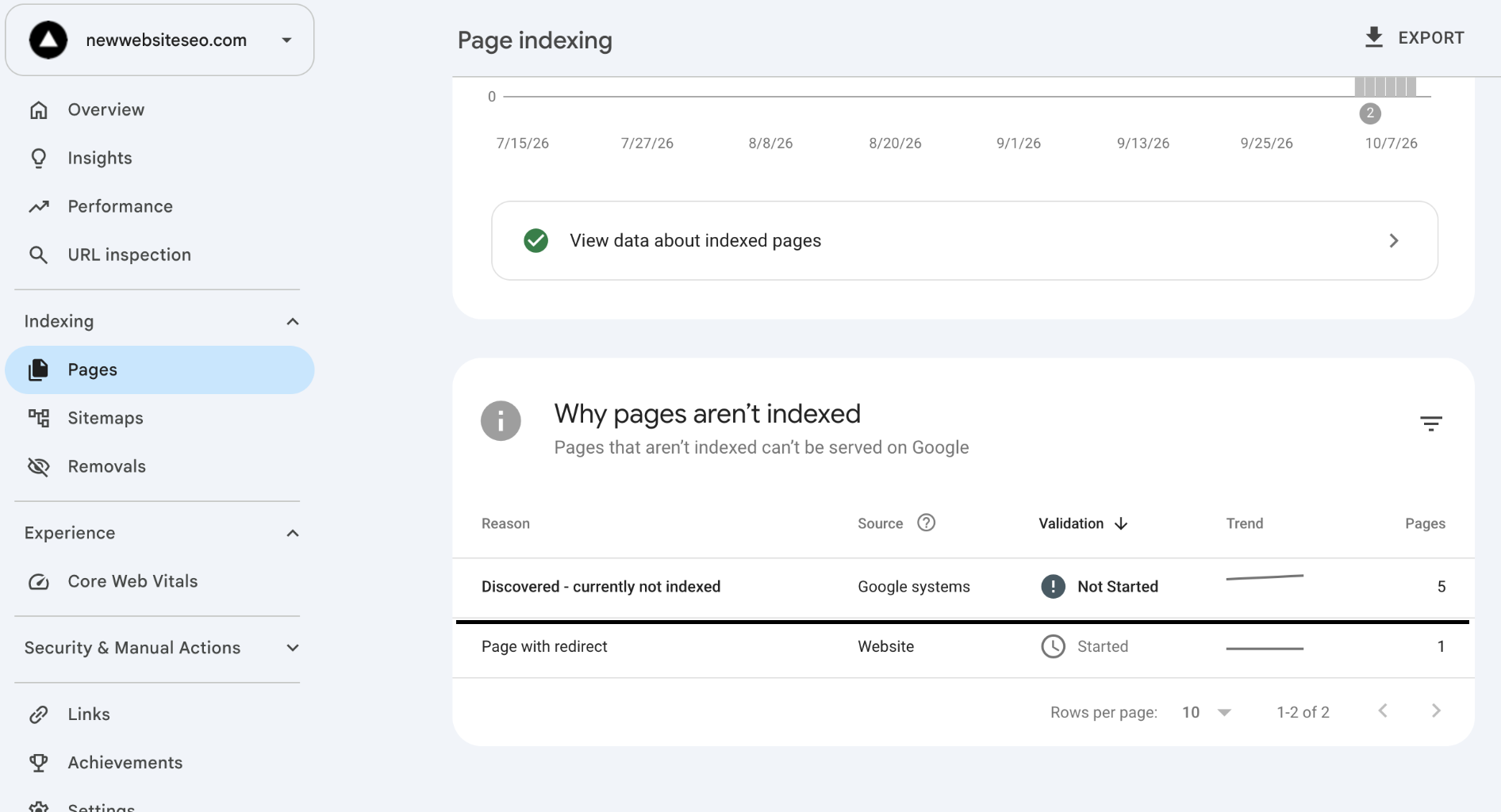
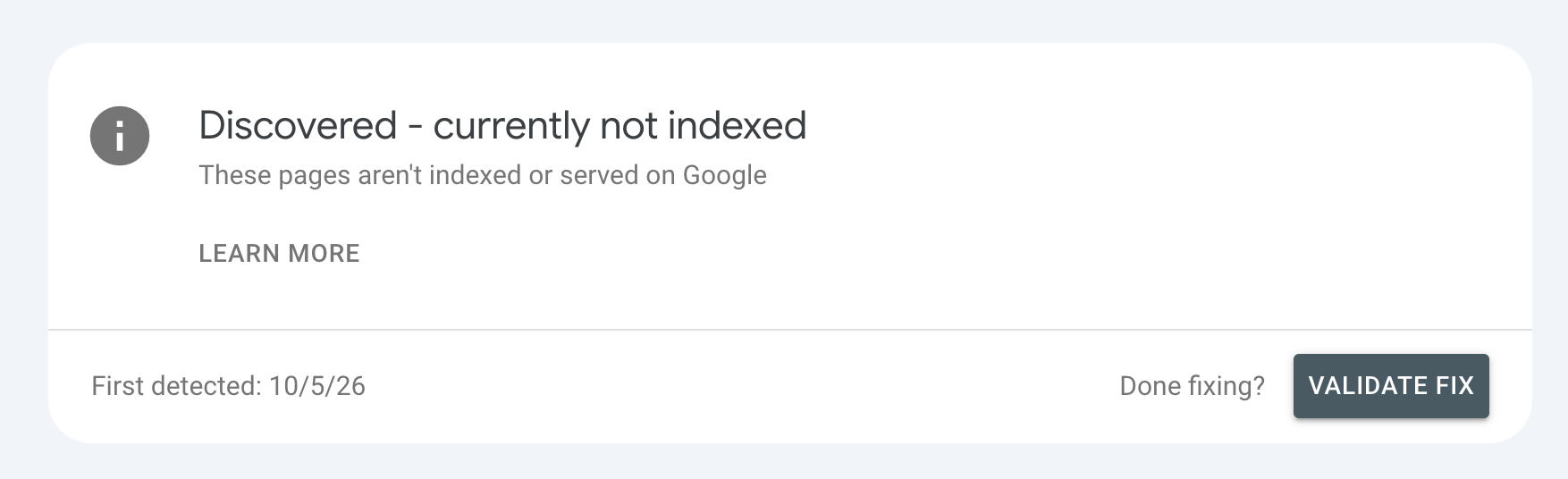
Five New Site SEO URLs had “Discovered – currently not indexed” next to them in Search Console. Every “Last crawled” field read N/A. The issue was first detected on October 5, 2026. A separate row listed one homepage URL under “Page with redirect.”
I checked the five pages, then requested indexing for the guides directory and three articles. I left the disclosure page out of the manual requests. Search Console accepted all four. I will update this case when the crawl or indexing status changes.
What “discovered” told me
Google had found these URLs but had not crawled them. That matters: “Crawled – currently not indexed” would mean Google fetched a page and then left it out of the index. This report gave me no basis to judge the five pages’ content that way.
Google’s Page indexing report documentation says a crawl may be postponed when Google expects fetching a URL to overload the site. The report did not show whether that happened here. I cover the general timing question in how long does it take for a new website to get indexed; this case concerns what I could verify about these five URLs.
The five affected URLs
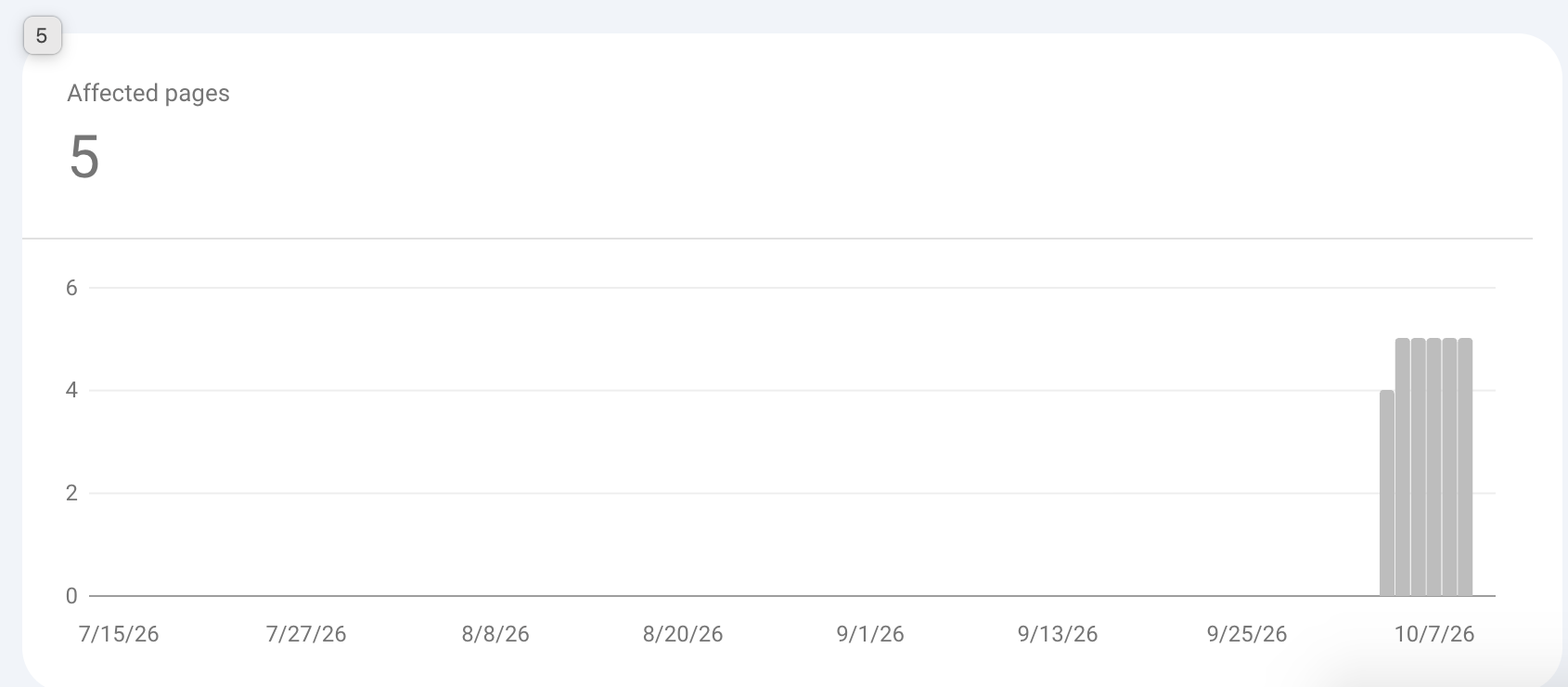
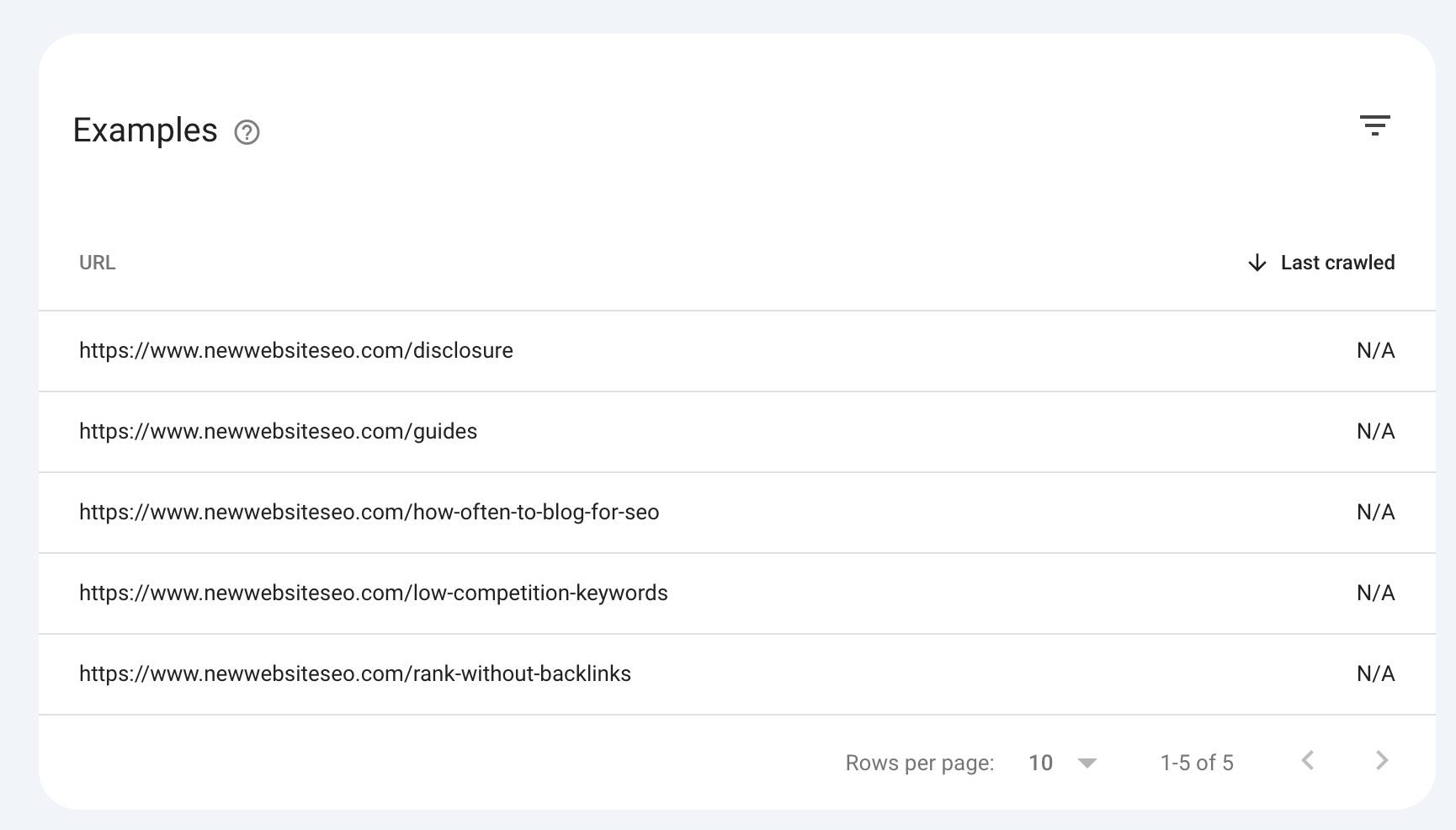
The affected-page count reached five. The examples table named all five, and “Last crawled” was N/A for every URL in the group when I reviewed it.
| URL | Purpose | What I did |
|---|---|---|
| /guides | Directory linking readers to the site’s guides | Requested indexing |
| /how-often-to-blog-for-seo | Article | Requested indexing |
| /low-competition-keywords | Article | Requested indexing |
| /rank-without-backlinks | Article | Requested indexing |
| /disclosure | Funding and disclosure information | No manual request |
Checks I made before requesting indexing
Before pressing “Request indexing,” I opened all five URLs. Each returned HTTP 200 in my browser, had its own title, and declared itself canonical. The site’s robots.txt allowed crawling. All five URLs were in the XML sitemap and linked from the homepage.
Search Console marked the submitted sitemap Success, reported 14 discovered pages, and showed a last read date of October 7, 2026. The sitemap was in place; its success status did not give me a crawl date for any individual page.
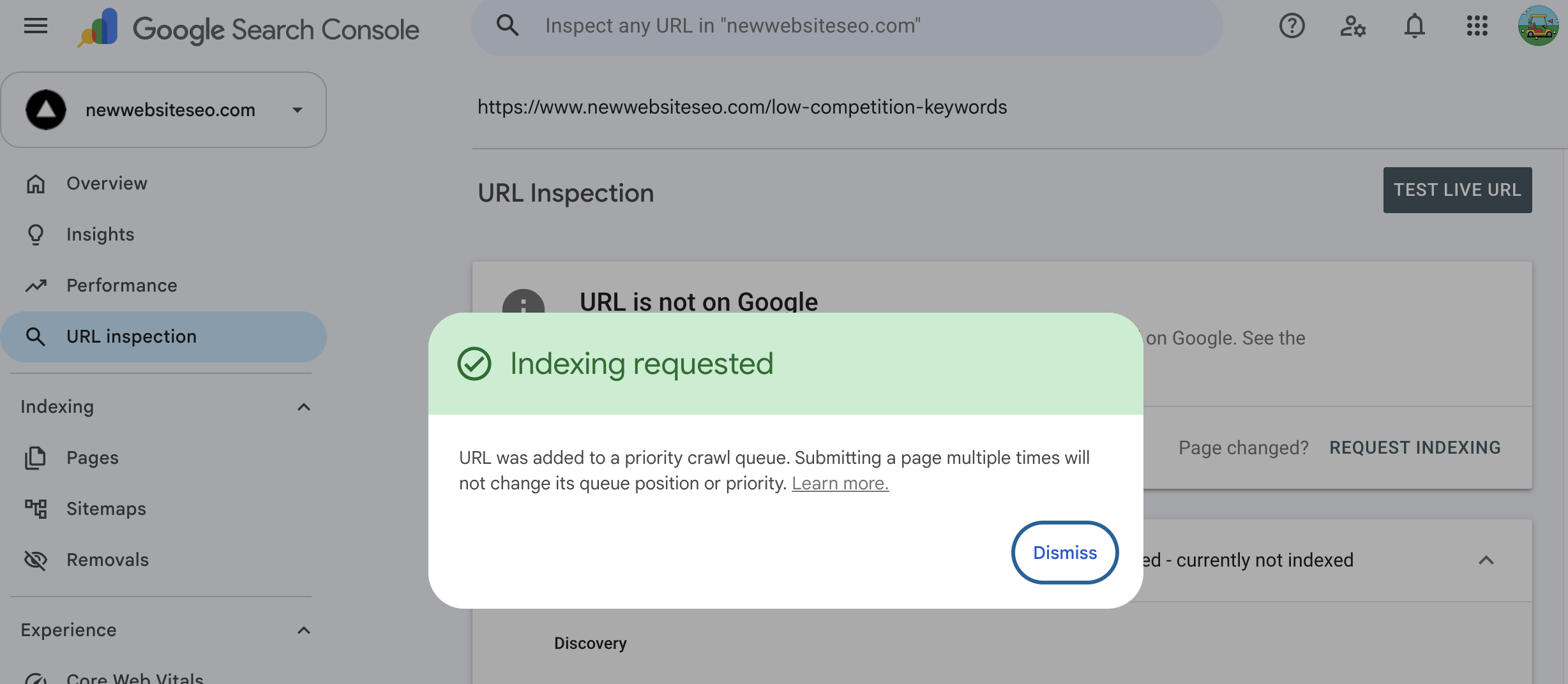
For /how-often-to-blog-for-seo, I also ran Test live URL. It said the current page was available to Google and could be indexed, while the stored result still said “URL is not on Google.” The live test checked the page as it stood then; it did not update the stored index result or predict Google’s canonical choice. Google’s URL Inspection documentation explains the difference.
That inspection result also said “No referring sitemaps detected.” The URL was plainly in the successful sitemap. Google notes that URL Inspection can sometimes omit a sitemap that contains a page, so I used the sitemap report and the XML file to check it.
Why four pages got a manual request
The homepage guide, how to start SEO for a new website, leads readers into the site. The /guides directory helps them find a topic once they are there, so I included it in my requests.
I included the three articles for the same practical reason. Two cover how often to blog for SEO and how to find low-competition keywords for a new website; the third covers ranking without backlinks. These are questions the site is meant to answer.
The remaining URL, /disclosure, explains the site’s funding and disclosure position. It is linked and listed in the sitemap, but I put it behind the guide directory and articles for manual requests. I left the page available to Google.
The confirmation said the URL had entered a priority crawl queue. It also warned that another submission would not change its queue position or priority. I made one request per priority page and will check the results instead of repeating the requests. Google’s indexing-request guidance says submission does not guarantee indexing.
The report’s “Validation: Not Started” label was unrelated to those requests. Validation checks a reported issue after a fix. I had not identified a specific site-side defect to validate.
The homepage redirect needed no fix
The redirecting URL was https://newwebsiteseo.com/. It leads to https://www.newwebsiteseo.com/, the preferred homepage address. The redirecting URL is not indexed as a separate page; the destination has its own indexing status. I left that redirect in place. Google documents “Page with redirect” separately.
What I will record next
I will check the four priority URLs again for a last crawl date, an updated indexing status, and, if indexed, the Google-selected canonical. A crawl date would tell me Google had fetched the page; indexing would be a further step.
If the important pages remain uncrawled, I will review Search Console’s Crawl Stats and server logs for availability or response problems. Google’s crawling troubleshooting guide describes what to check.
Status on October 13, 2026: Search Console accepted four indexing requests. The screenshots for this case still showed N/A for all five last crawl dates. I have not verified a later crawl or indexing outcome.